
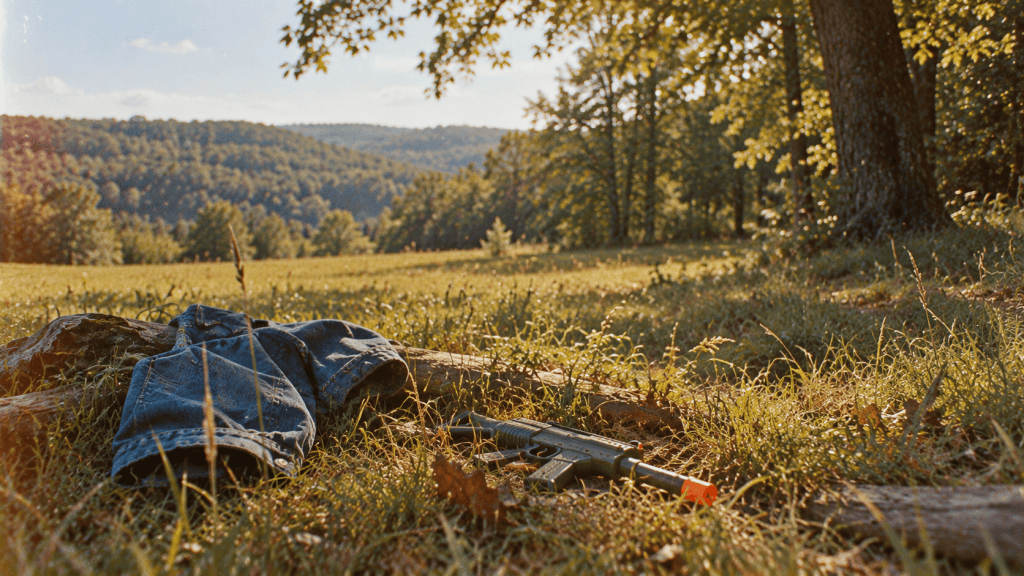
When I was a kid, my cousins and I loved to play soldier. We were young and playing with the concepts of bravery and honor without any skin in the game. They were the commanders. They set the stage. They developed the story. I played my part. I played it with enthusiasm.
My part was that of a supporting cast member. Often one who died. Died quickly at that. They were the heroes. They did the important things. Completed the mission. Received the recognition. I died dramatically. I was a bit of an over-actor.
They authored the story. I played my part and felt important because my part mattered to the story they were telling. Sometimes they allowed a little improvisation, and I took advantage of that. I could add a line, change the way I fell, or make my death more dramatic. It gave me a small measure of authorship. It was enough.
I grew up.
I fell in love.
We live our entire lives from behind our own eyes. Every memory, hope, and fear arrives from that position. Other people come and go, but we’re always there. It’s easy to mistake that for being the center of the story.
We become the hero without ever auditioning for the role.
When you fall in love, a curious thing happens. You begin to write alongside another person. Decisions become ours. Plans become ours. The future becomes ours.
You share work, children, the kitchen, the bathroom, and the day-to-day business of living. You build a life together, making decisions and adjusting plans until the collaboration becomes so familiar you stop noticing it.
Eventually, it no longer occurs to you to imagine a future without the person you love. Their presence is assumed before you begin making plans.
And then, sometimes, one of you starts writing alone.
There isn’t necessarily an announcement. No dramatic moment where the book is closed. One person begins writing a future that no longer includes the other. Perhaps the decision comes suddenly. Perhaps it has been taking shape for months before anyone speaks of it. By the time you learn what has happened, the story may be much further along than you realized.
I know how bewildering that is.
I was still making plans for us. Still thinking about what we needed to do, what we could repair, how we might find our way through the difficulty. I believed we were facing a problem together. It took me a long time to understand that she was making a decision of her own.
I kept trying to participate.
I asked questions. Offered explanations. Suggested possibilities. I wanted to understand what had changed, and I wanted some say in what happened next. I had spent years being part of the decisions that shaped our lives. Now I was being told what those decisions were.
I could speak. I could object. I could explain what the ending would cost me. None of it gave me a vote.
I felt that helplessness low in my stomach. That kind of feeling that makes you want to run or scream or do both. I had spent much of my adult life in positions where responsibility came with some authority to act. I could make decisions, change plans, find another way to accomplish something. Even when the choices were terrible, there were choices to make.
But here, there was nothing I could do.
I was still living inside the story we had written together. She had begun another.
And I couldn’t understand why the story had stopped responding to me.
I had spent so long being central to our life that I didn’t recognize when I stopped being central to hers. I kept approaching her as though my presence, my understanding, and my willingness to remain must have some authority over what happened next.
They didn’t.
Oh. You’re not the hero anymore, Rob.
I’ve thought about that a great deal since.
Every person I love has a life I can participate in but never own. I may be central to it for a time. I may help shape its direction. I may become so familiar that neither of us can imagine the other being absent.
But I don’t get to decide what part I play forever.
That is a hard thing to accept after the person has become a central character in my own life. I can stop appearing in her story without her disappearing from mine. The relationship can end while I’m still smack dab in the middle of the love story. I can find myself living with consequences of choices I did not make, remembering a future we had once imagined together.
I think about those afternoons playing soldier with my cousins. I was happy enough to play the part they gave me. I knew the rules. I knew whose game it was. When I died, I could lie there in the grass looking up at the clouds thinking little boy thoughts until somebody announced that the mission was over.
Then I’d get up.
I liked that. It made sense.
In real life, nobody announces when your part is finished. Sometimes you simply discover that the story has moved on without you, while you’re still standing there with your lines memorized.
And sometimes you keep waiting for someone to tell you what happens next.

