
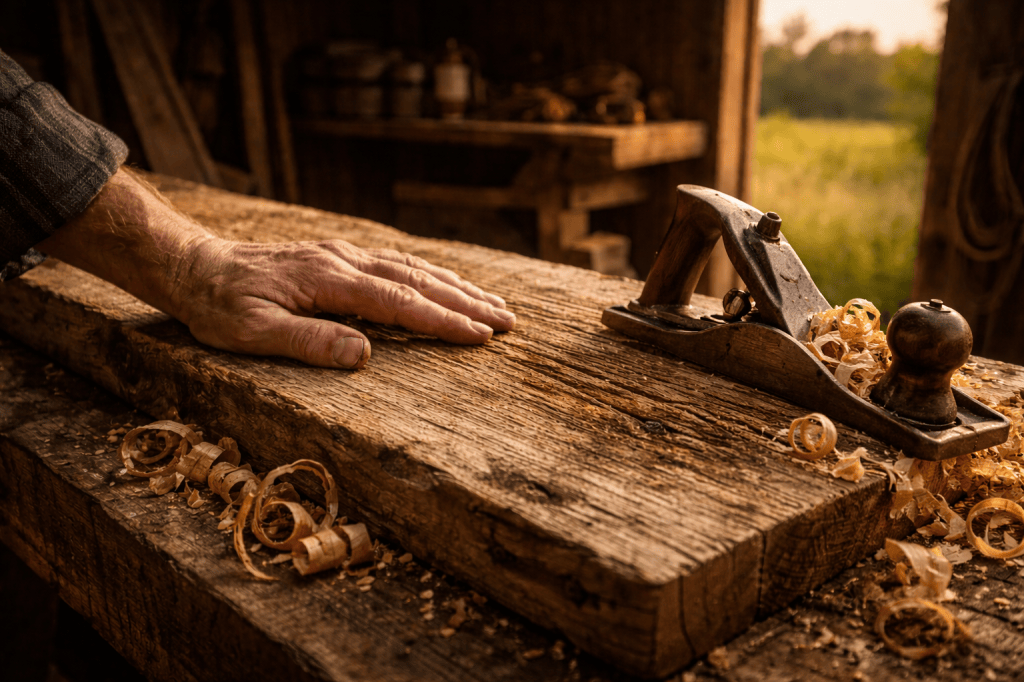
The truth of a thing lives in its grain.
Life doesn’t arrive as ideas. It arrives as texture.
A moment first touches the body before it touches the mind. The skin notices it. The lungs notice it. Something inside the ribs shifts to hold its weight. Only later do we give the thing a name and pretend the name was always there.
But it wasn’t.
What we felt first was the grain.
Some moments are smooth, like river stone turned in the hand for years. Others catch. They snag the skin and leave splinters that work themselves deeper the more you try to ignore them. Joy carries warmth, a spreading ease in the chest that loosens the breath. Fear tightens instead, like wire drawn through the ribs. Grief is heavier than it should be, as if the bones of your chest were replaced with wet sand.
The body knows these things long before the mind does.
I used to believe life was made of understanding and decisions. That if I looked closely enough I could understand why something happened, and that explanation would somehow make the moment complete. But the truth is rougher than that. It keeps its temperature, its weight, and its splinters.
Most of what we call meaning is just how we narrate it afterward.
The moment itself is quieter than that.
A hand on your shoulder carries a certain weight. The sound of a laugh in another room moves through the air with a particular softness. The silence after an argument has its own temperature. The last time you see someone rarely announces itself. It passes the same way the others did, wearing the ordinary comfortable texture of a day you assumed would continue.
Only later do you return to it and realize what it was.
I think about that sometimes when I’m working with my hands. Wood tells the truth faster than memory does. Run your palm across a board and you can feel the grain immediately. You know where it will resist. You know where it will open. Sand it long enough and the surface grows smooth, easy on the skin, pleasant even.
But sand it too much and you erase the thing that made the wood what it was.
The grain disappears.
Life works the same way. With enough distance and enough retelling, we begin smoothing our past the way a careful carpenter smooths a board. The sharp places fade. The splinters work themselves free. The story becomes easier to explain. Easier to carry.
But something important goes with it.
The roughness is where the truth lives. The heat of a moment. The pressure of a hand. The strange gravity of being close to someone who matters more than you can comfortably admit. Those things were never smooth when they happened. They carried edges. They caught on the skin.
That was the proof they were real.
I don’t trust the polished version of memory anymore. I don’t trust the tidy explanation that turns a complicated life into a clean story about lessons learned and wisdom gained. That version may be easier to carry, but it’s been sanded too smooth. It feels dishonest in the hand.
What mattered should still have texture.
It should still feel warm in places and sharp in others. It should still surprise you when you reach for it. The past should keep its grain the way old wood keeps its rings—evidence of weather, of drought, of seasons that left their mark whether anyone approved of them or not.
Moments weren’t meant to be perfect. They were meant to be lived.
And lived things have surfaces.
So I try not to sand them down anymore. I let them stay rough where they were rough. I let them keep their weight. I let them catch on my hands when I reach back through time and pick them up again.
The grain matters.
Because before the stories we tell about our lives, before the meaning we press onto events so they will sit quietly in our memory, there was something simpler moving through us.
Pressure.
Weight.
Silence.
Heat.
The body felt it first.
And if we’re honest with ourselves, that texture is still there, waiting under the words, exactly the way life left it.


4 responses to “Grain”
Wyatts best Quotes: ‘Moments weren’t meant to be perfect. They were meant to be lived’
LikeLiked by 1 person
Thank you. As I looking behind me, I think I spent too much time trying to plan for perfect moments or polish them after the fact to make them perfect. The real ones show up a little (or a lot) rough, and the friction makes them real.
LikeLiked by 1 person
In the reality of those moments is growth and discovery, beauty in that growth and learning.
Pain is hard to face, our past behaviors are hard to look at, at least dead in the eye. So we do that polish thing.
As soon as we understand the twist to that, what happens if we don’t, our sense of peace increases. Maybe a weird paradox
LikeLiked by 1 person
As we have talked of, it’s better to know than not know. I agree with you, authenticity and honesty is much more apt to bring peace than the polishing thing.
LikeLiked by 1 person